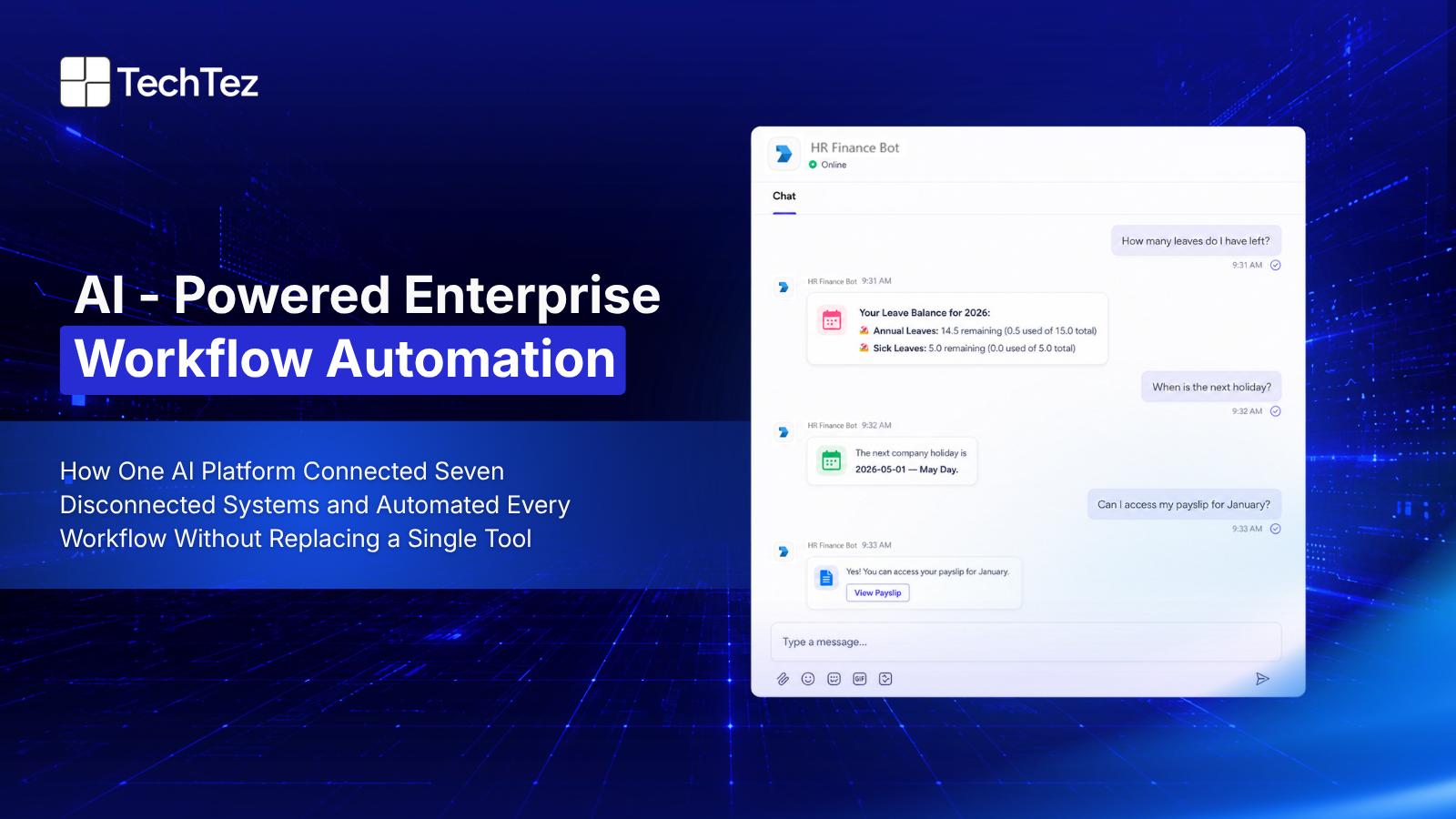
A large enterprise replaced fragmented approvals and disconnected portals with a single AI workflow layer inside Microsoft Teams and Slack, deployed in six weeks without changing existing systems.
The client operated at scale. Thousands of employees. Multiple departments. Seven separate systems for routine operational requests. The result was predictable: coordination had become a full-time job.
Leave requests sat in email chains waiting for managers to remember to act. Expense claims routed manually across inboxes for 24 to 48 hours before anyone touched them. IT tickets were raised by email with no tracking and no visibility. Procurement moved from request to purchase order in three to five days, manually, across email and ERP.
Enterprise operating on fragmented systems face compounding costs: higher employee time spent on coordination rather than meaningful work, slower decision cycles as approval chains grow, increased manager overhead from manual follow-ups, and mounting operational debt from inconsistent processes across departments. The productivity gap between AI-automated and manually operated enterprises widens by roughly 30% each year in high-output operational environments.
Key Challenges:
TechTez built a governed AI automation layer powered by N8N orchestration. Unlike standalone chatbots or disconnected automations, the platform coordinates workflows across departments, systems, policies, and approvers in a single layer. Employees interact in Microsoft Teams or Slack using plain language, while AI agents route, track, and manage requests with full human approval control and audit visibility built in.

The architecture was guided by four decisions that shaped everything built after them:
The platform was delivered as a fully integrated conversational workflow layer accessible inside Microsoft Teams, Slack, or any existing enterprise interface. Here is what was built to make that possible.

The solution delivered measurable efficiency, accuracy, and scalability improvements.

AI & Intelligence:
Workflow & Automation:
Interface & Integration:
Infrastructure & Security: